

NEWS CENTER
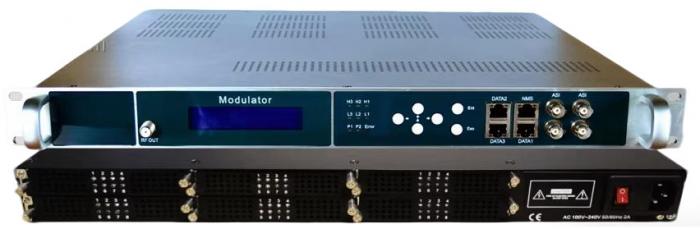
What Are The Available IPTV Analog Modulator Products In The Market?
Greetings! As a supplier of analog modulators, I'd like to provide an overview of the various analog modulator products currently on the market. These devices are indispensable across numerous sectors—from broadcasting to telecommunications—and serve as critical components in signal processing. Let’s explore the key options available today.
Video IP Analog Modulator
To start with, we have the Video IP Analog Modulator. This device is engineered to transform video signals into a transmissible format within a designated frequency spectrum. It finds extensive application in cable television systems, video monitoring setups, and any scenario that demands video transmission over extended distances.
A standout feature of video analog modulators is their adaptability. They can accommodate multiple video signal formats, including composite video, S-video, and component video, making them compatible with a broad range of video devices—from surveillance cameras to DVD players. Additionally, most models come with adjustable output levels and frequencies, enabling users to calibrate the signal to match their specific application needs.
Reliability is another key strength of these modulators. Having been in use for many years, they have demonstrated consistent performance across diverse operating environments. Furthermore, their installation and maintenance processes are relatively straightforward, making them a preferred choice for both professional technicians and hobbyists alike.
32-in-1 Analog Modulator
Next, let’s examine the 32-in-1 Analog Modulator. True to its name, this device can process up to 32 input signals simultaneously. It presents an excellent solution for situations where multiple video or audio signals need to be consolidated into a single output stream.
The primary advantage of the 32-in-1 analog modulator lies in its efficiency. Rather than deploying multiple individual modulators, a single unit can handle all input signals—this not only saves physical space but also reduces overall costs. Moreover, it streamlines the installation and configuration process, as users only need to manage one device instead of several.
Flexibility is another notable benefit. Typically, the 32-in-1 analog modulator offers a variety of input and output interfaces, allowing for customization to suit specific requirements. Users can select from different connector types, such as BNC, RCA, and HDMI, and adjust the output frequency and signal level for each individual input channel.
IP to Analog NTSC PAL Modulator
Last but not least, we have the IP to Analog NTSC PAL Modulator. This specialized modulator is designed to convert IP-based video signals into analog NTSC or PAL formats. It is an ideal solution for integrating modern IP video systems with existing analog equipment.
Compatibility is the main draw of this modulator. It enables existing analog devices—such as TVs, monitors, and other equipment—to work seamlessly with IP-based video sources, including IP cameras and network video recorders. This eliminates the need to replace all analog hardware when upgrading to an IP-based system, resulting in significant cost savings.
Ease of use is another key feature. Most IP to analog NTSC PAL modulators come with a user-friendly web interface, which allows for simple device configuration and video stream management. Users can also adjust output frequencies and levels, as well as perform additional functions like channel scanning and signal monitoring.
Other Available Products
Beyond the three main types mentioned above, the market offers several other varieties of analog modulators. For instance, audio analog modulators are used to convert audio signals into a format suitable for transmission over a specific frequency range. Additionally, RF modulators convert video and audio signals into radio frequency (RF) signals, which can be transmitted either over the air or via cable.
When selecting an analog modulator, it’s crucial to consider your specific needs. Key factors to evaluate include the type of signals you need to process, the required output frequency and level, the number of input and output channels, the product’s quality and reliability, as well as its cost and the level of support provided by the manufacturer.
Why Choose Our Products
As a dedicated analog modulator supplier, we offer a comprehensive range of high-quality products tailored to meet the diverse needs of our customers. Our products are crafted from premium materials and manufactured using cutting-edge technology, ensuring stable performance and a long service life.
 Send Email
 leo5877
 Sales01
 8613964895219
 QQ
QQ